Hand-Truck 48V System
Portable 5 kWh, builds in 25 minutes ~$1,900
Budget Whole-Home Backup
12 kW inverter, 32 kWh battery from ~$4,750
Off-Grid Home Blueprint
Whole-house off-grid, 5–12 kW ~$9,800
Code-Compliant 48V System
Grid-tie hybrid, permit & inspection ready ~$13,500
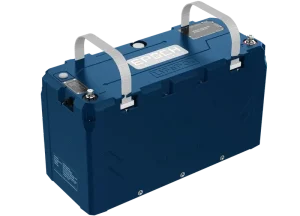
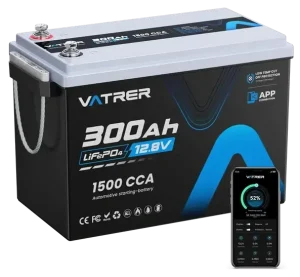
Mobile, 12V, tight on space and weight
Marine-rated, waterproof, heated cells
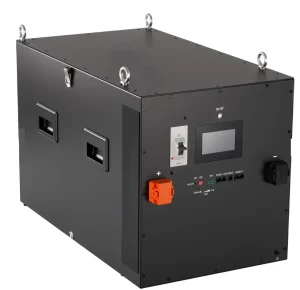
Small off-grid build, 12V or 48V
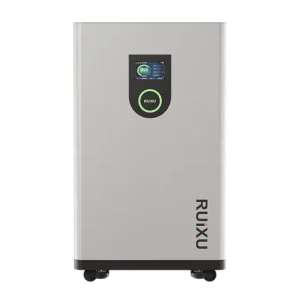
Off-grid or grid-tied with backup
Portable 5kWh build, about $2,020
A 48V solar power system on a hand truck: one 5,000W all-in-one inverter and one 5.12kWh server rack battery, wired together in about 25 minutes. Roll it into a garage, an RV, a job site or a closet, plug in solar or shore power, and run 120V loads from its outlet box.
Every part, setting and wire size is on this page, plus a planner that checks your solar panels and adds every Amazon part to your cart at once.
Affiliate links below
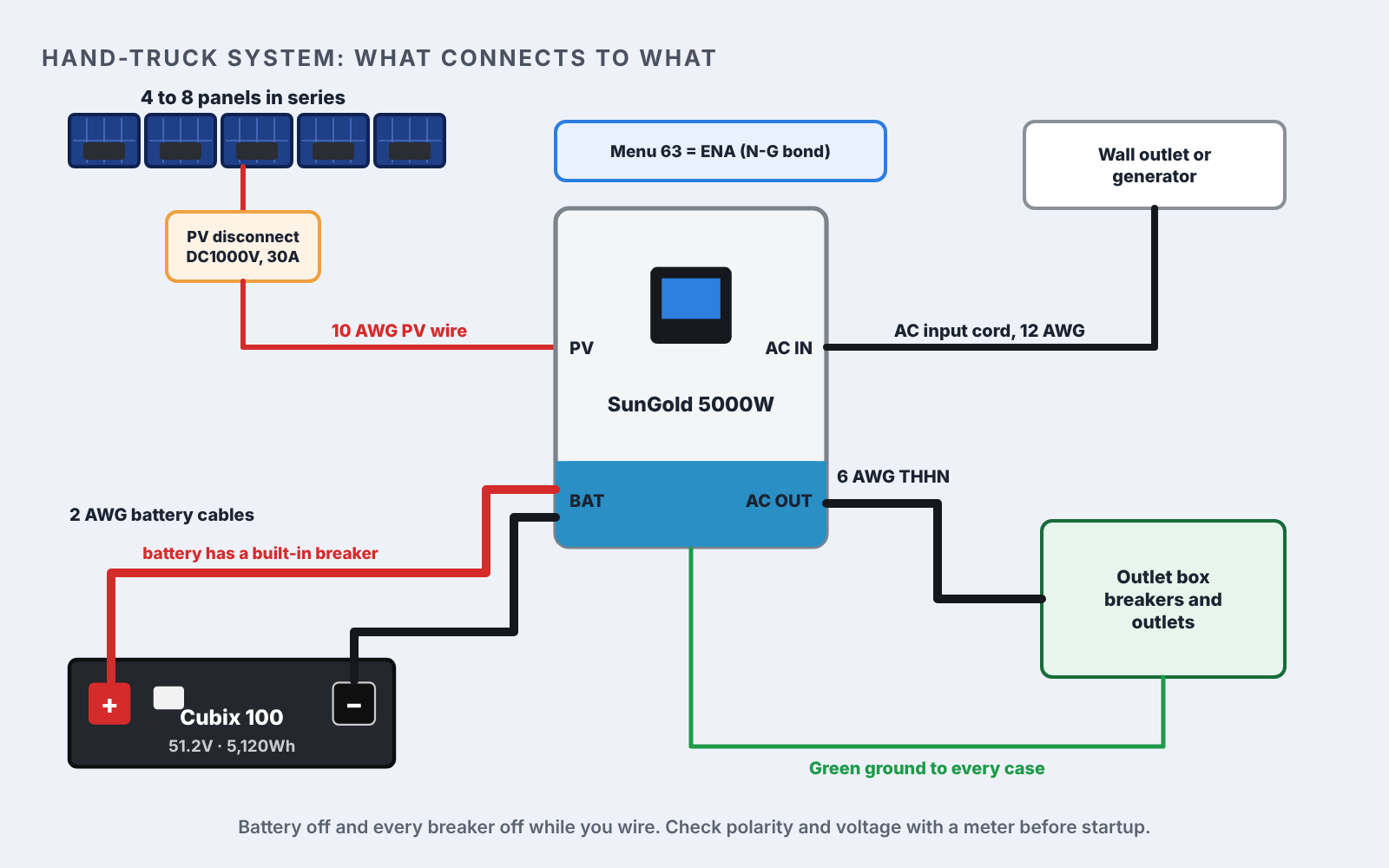
Turn off the battery, make every connection, then add solar and turn it on in order. The parts list is short, and the wiring is two battery cables, two AC cords and one solar cable.
Plan your build · Cost · Inverter · Battery · Hand truck · Parts · Checklist · Build it · Settings · Solar · Troubleshooting
Download the 4-page build sheet (PDF): wiring diagram, parts with prices, settings, startup order, string table, fault codes and a maintenance log.
| Part | Price |
|---|---|
| SunGold Power 5000W inverter | $768 |
| ECO-WORTHY Cubix 100 battery | $890 |
| Harbor Freight 800 lb hand truck | $69 on sale ($79) |
| Two custom 2 AWG battery cables: red 2 ft, black 2 ft | About $97 |
| Outlet box | $90 |
| 6 AWG THHN kit | $36 |
| AC input cord | $13 |
| 10 AWG MC4 extension cable | $32 |
| PV disconnect, DC1000V 30A | $28 |
| Total | About $2,023 |
Prices checked November 13, 2026. They change, so use the buttons below for the current price. Solar panels and tools are extra; the three tools on this page add $74 if you need them.
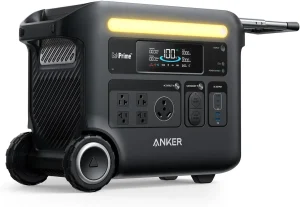
| This build | Anker S2000 | Anker F3000 | Anker S5000 | |
|---|---|---|---|---|
| Price | About $2,023 | $700 WINS | $1,700 | $2,949 |
| Battery | 5,120Wh WINS | 2,010Wh | 3,072Wh | 5,024Wh |
| Per kWh | $395 | $348 WINS | $553 | $587 |
| AC output | 5,000W, 120V WINS | 1,500W, 120V | 3,600W, 120V | 4,500W, 120/240V |
| Solar input | 5,500W WINS | 400W | 2,400W | 3,000W |
| If a part fails | Replace the inverter, battery or a cable on its own WINS | One sealed unit | One sealed unit | One sealed unit |
| Categories won | 4 of 6 | 2 of 6 | 0 of 6 | 0 of 6 |
| Buy it | Add to Cart | Check Price | Check Price | Check Price |
The S2000 costs less per kWh but tops out at 1,500W and 400W of solar. This build runs bigger loads and takes more solar than any of them, and you can replace the inverter or battery on your own. The S5000 is the pick if you need 240V. Prices from my Anker page.
This build uses the SunGoldPower 5000W all-in-one. The inverter, the solar charge controller and the battery charger are in the same box.
5,000W at 120V, 5,500W of solar input and up to 100A of battery charging. 28.7 lb. About $768.
The ECO-WORTHY Cubix 100: one 48V, 100Ah server rack battery (5,120Wh) with a communication port that plugs into the inverter. This build uses one.
Load and battery life. The system runs up to 5,000W continuous, the inverter’s rating. The Cubix 100 recommends 50A (Current Connected spec page), about 2,200W of AC after inverter losses. Keep steady loads under about 2,200W for long battery life, and start big motors one at a time.
5,120Wh, 100A continuous, 6,000 cycles to 80%. UL 9540 listed. 103 lb. About $890.
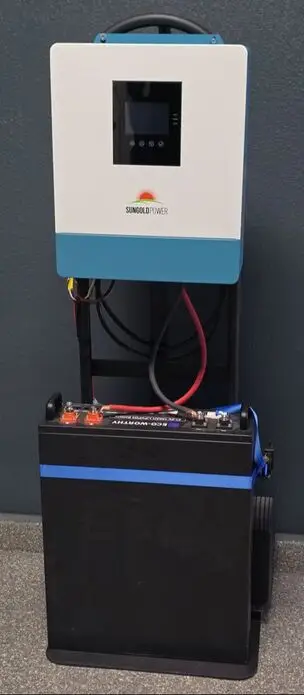
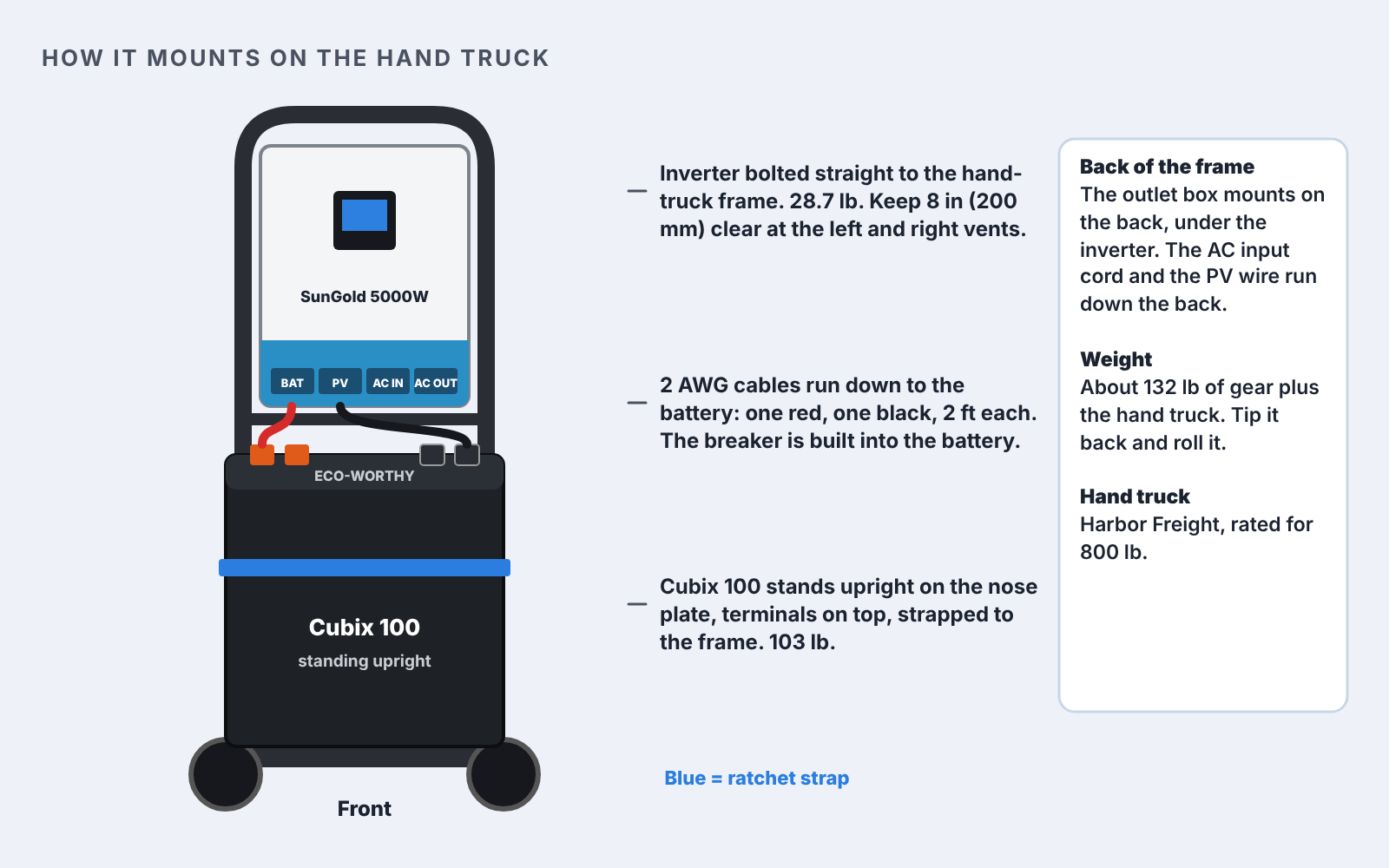
Harbor Freight’s 800 lb capacity hand truck. The Cubix 100 stands upright on the nose plate with its terminals on top and a ratchet strap around it. The inverter bolts straight to the frame above it, and the outlet box mounts on the back of the frame. Everything together weighs about 132 lb plus the truck, so tip it back and roll it rather than lifting it.
800 lb capacity, about $69 on sale ($79 regular). The inverter bolts straight to the frame.
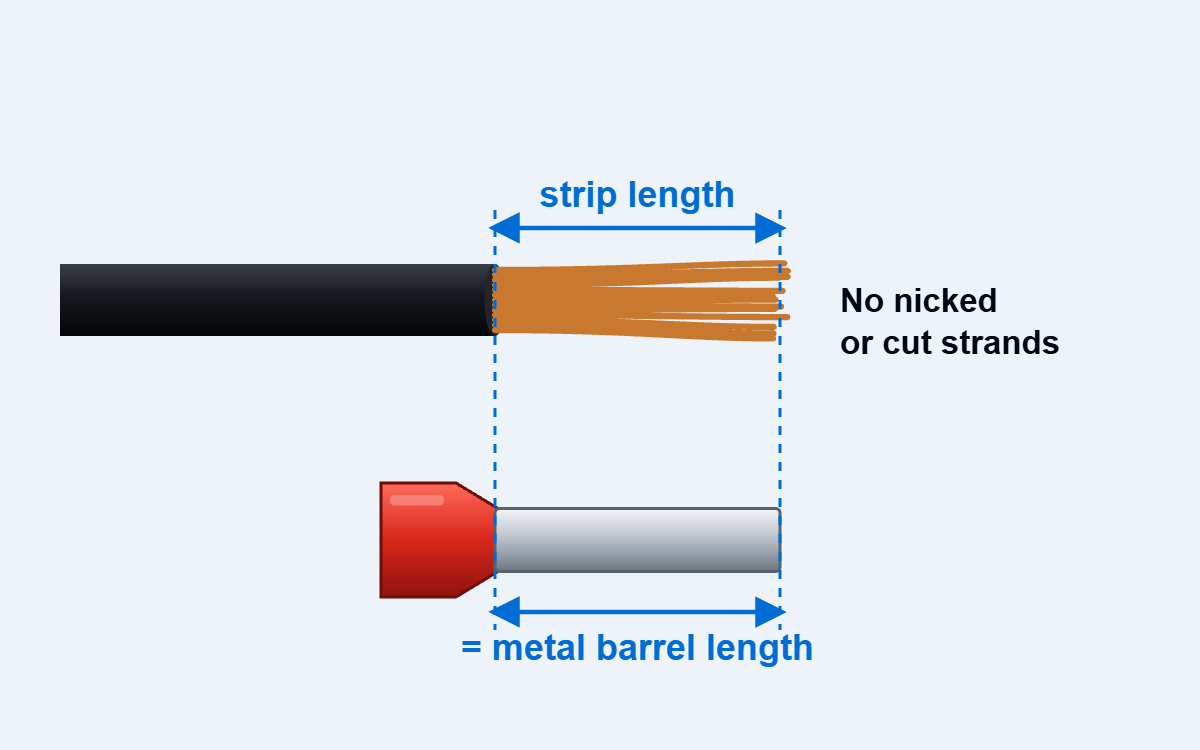
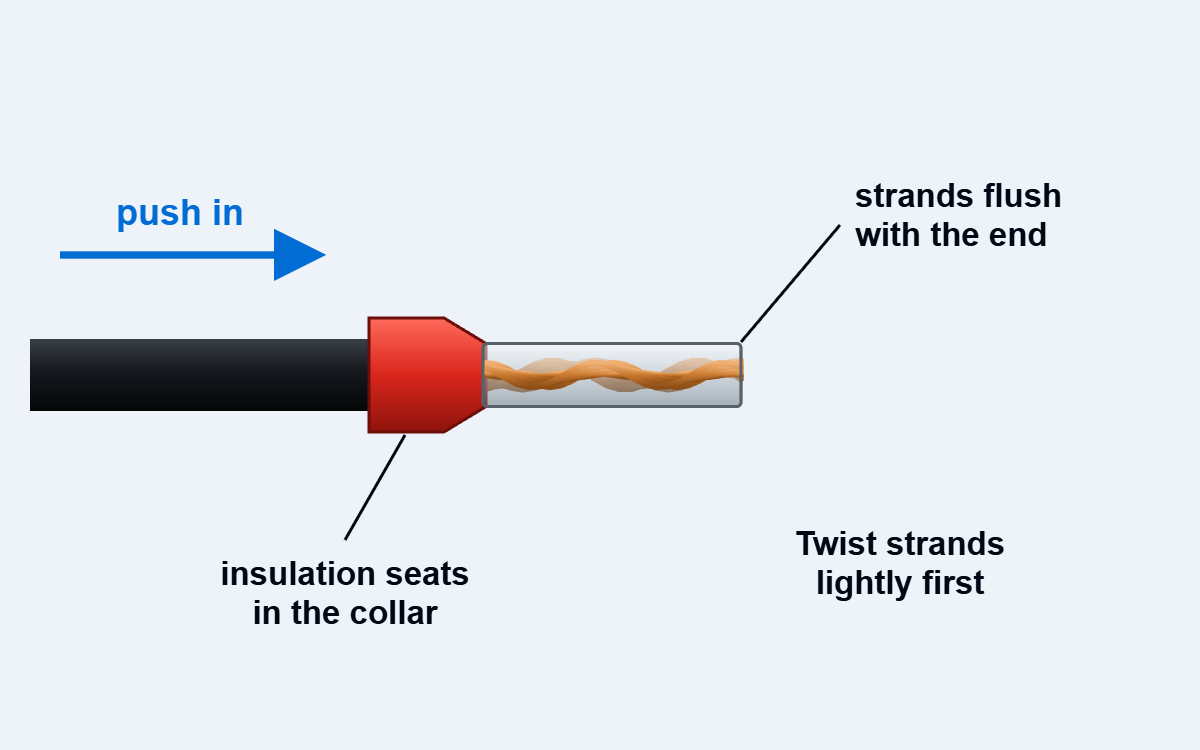
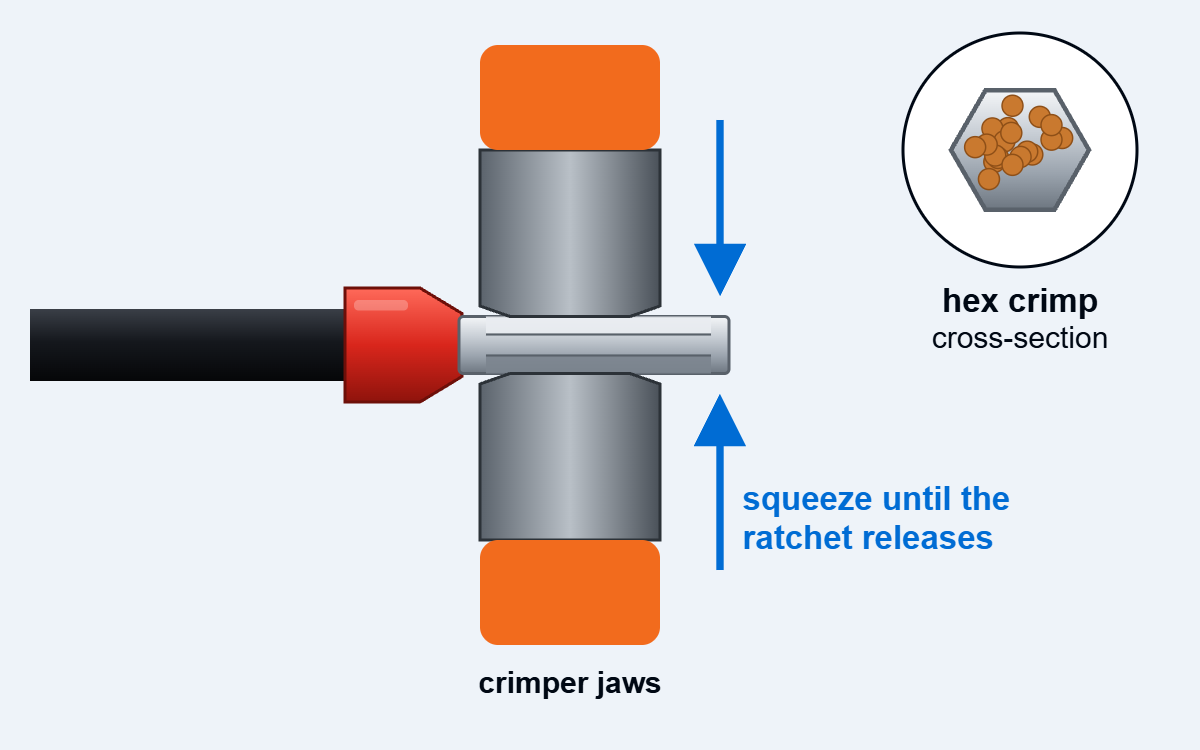
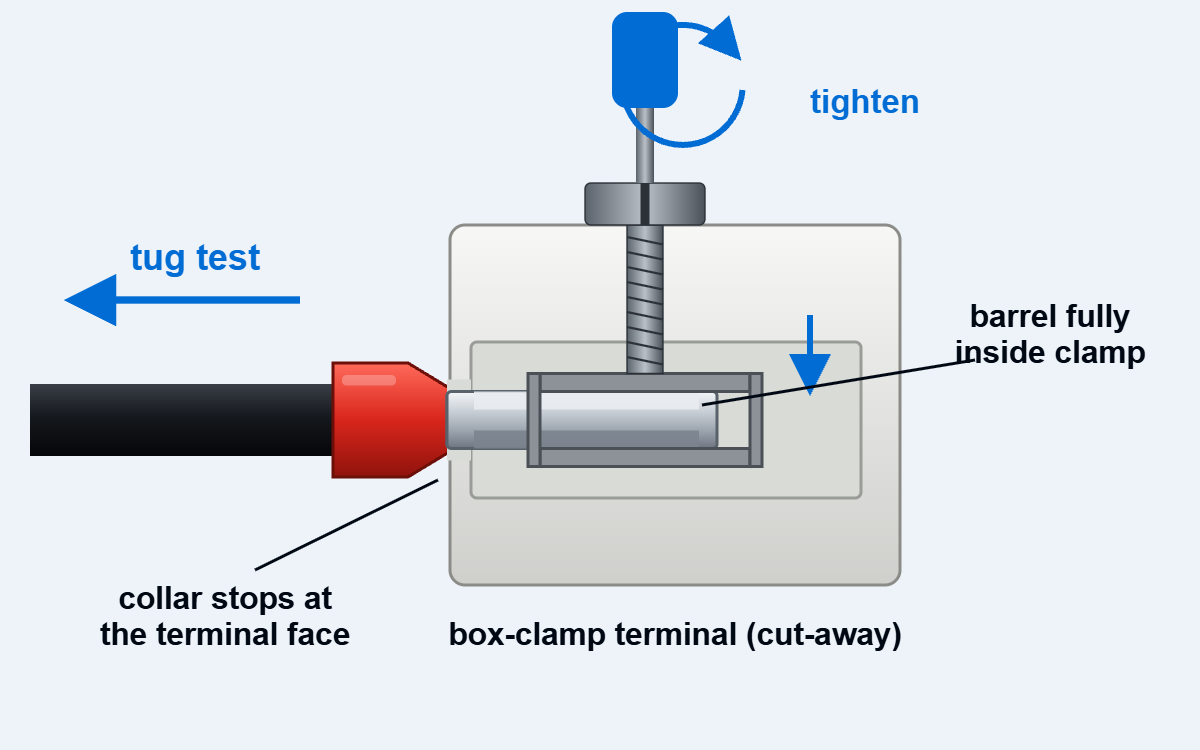
Battery cables, cords, solar wiring parts and tools. The ferrule kit is for the AC and PV wires that go into the screw terminals on the inverter. The planner below adds every Amazon part to your cart in one click.
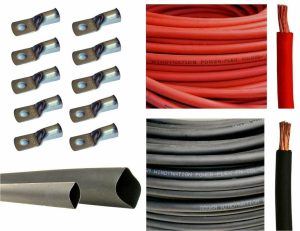
Order two in 2 AWG, 2 ft each: red (battery + to BAT+) and black (battery − to BAT−). The breaker is built into the Cubix 100, so there is no separate DC breaker. Battery end: 5/16 in (M8) lug. Inverter end: 1/4 in (M6) lug. Measure on your own hand truck first.
Breakers and outlets in one box. About $90.
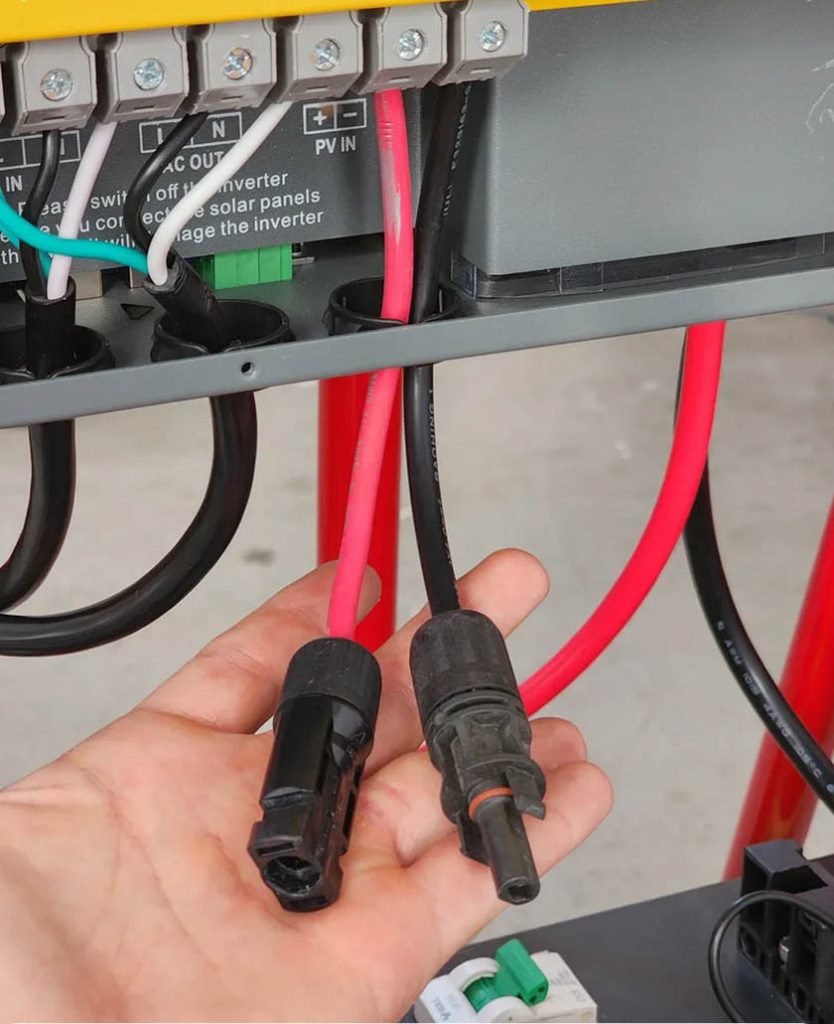
Connect any solar panels to this system with this cable
Cuts the AC cords and the 6 AWG THHN for the outlet box.
Strips 10 to 24 AWG: the AC cords and the 10 AWG PV wire.
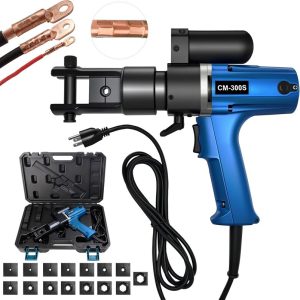
Hex ratchet crimper and 1,200 ferrules (28-5 AWG) for every stranded wire going into a screw terminal
Local Hardware Store
Your checks save in this browser, so you can come back as parts arrive.

Download the 4-page build sheet (PDF): print it and keep it with the system.
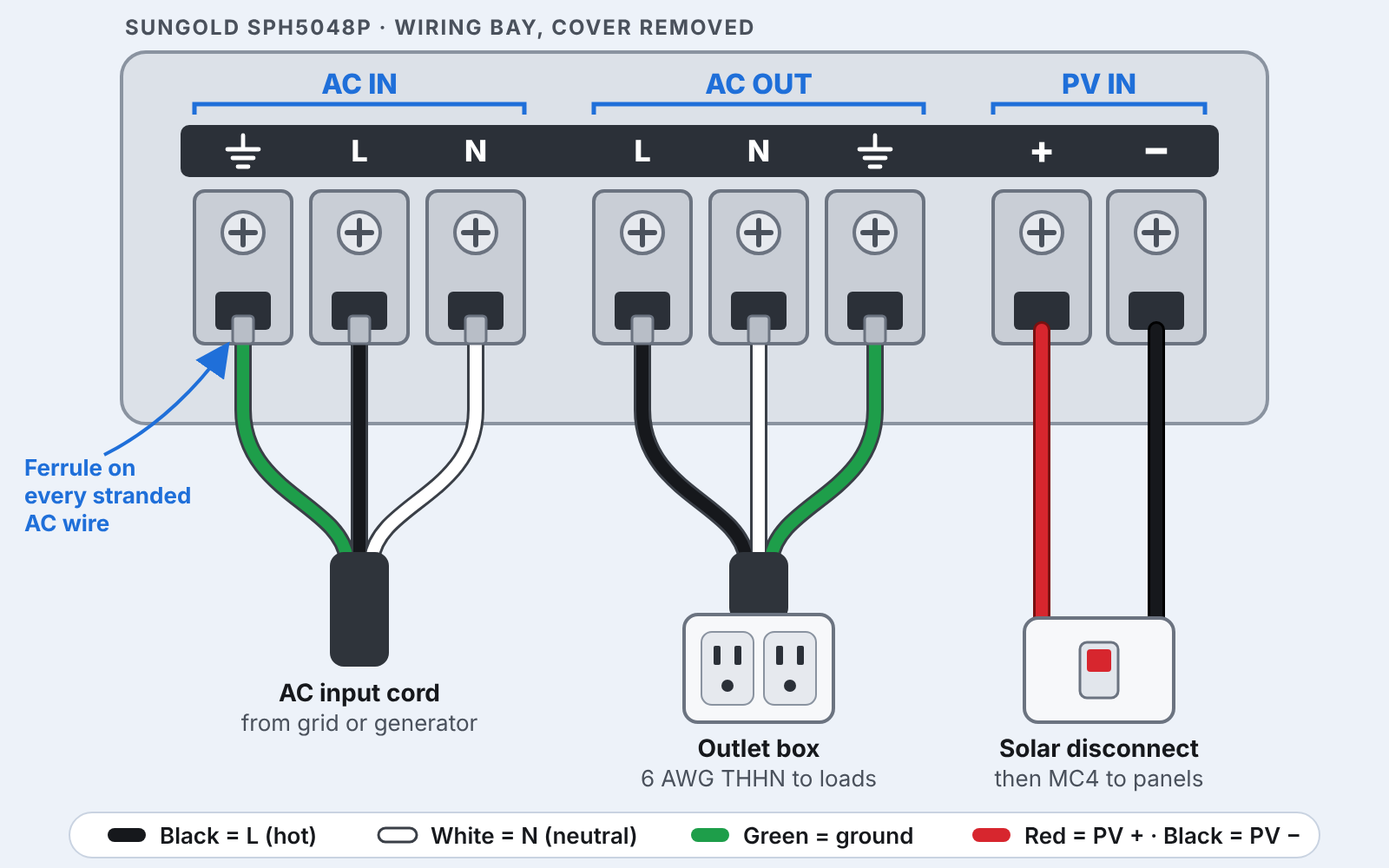
The AC terminals on this inverter are screw clamps. When a screw lands on bare stranded wire it spreads the strands apart, some miss the clamp, and the connection can loosen and heat up over time. A ferrule turns the strands into one solid pin the clamp can grip. Use one on every stranded wire that goes into a screw terminal: the AC input cord, the AC output wires, the 6 AWG THHN to the outlet box and the two PV wires at the PV input. The kit is in Step 04 above.
Instead of adding a load panel, breakers, Romex and outlets, use this box. It has its own breakers and NEMA 5-20 outlets. Connect it to the inverter’s AC OUT with 6 AWG THHN from any hardware store, or buy the THHN kit here.
Breakers and outlets in one box. About $90.
Start it in this order: battery breaker on, Cubix 100 on, inverter rocker switch on, set the menu items below, then the PV disconnect and the AC input. Turn loads on one at a time. Shut down in reverse.
You do not need a communication cable. Set the inverter by voltage instead. These are starting values for a 51.2V, 16-cell lithium battery like the Cubix 100.
| Item | What it is | Set it to |
|---|---|---|
| 08 | Battery type. Default is GEL. | USER |
| 09 | Boost (bulk) charge voltage. | 56.0V |
| 11 | Float charge voltage. | 54.0V |
| 16 | Equalization. Default is on, at 58V. | DIS. Never equalize a lithium battery. |
| 12 | Low voltage cutoff. The inverter turns its output off here. | 48.0V |
| 14 | Low battery alarm. | 50.0V |
| 15 | Discharge limit voltage. | 46.0V |
| 35 | Voltage where the output comes back on after a cutoff. | 52.0V (default) |
| 28 | Charging current from the wall. | 20A or less on a household outlet. 20A of charging pulls about 10A from the wall. |
| 63 | Neutral to ground bond. Default is off. | ENA. See the next section. |
Optional: if you plug in the communication cable, set 08 to LFP16, 32 to 485 and 33 to PYL. The battery then reports its own limits to the inverter.
In a house, neutral and ground are tied together at the main panel. That bond is what lets a breaker trip when a hot wire touches a metal case.
This system runs on its own, so it needs its own bond. The inverter can make it, but the setting ships turned off.
With item 63 on, the inverter switches the bond automatically. Also run the green ground wires as shown in the wiring cards above.
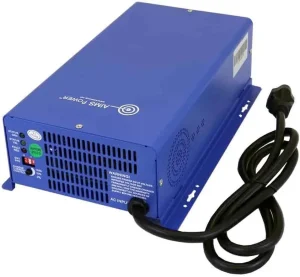
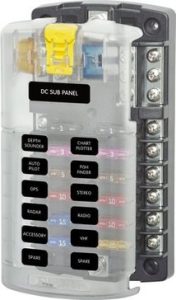
These golf cart converters have a 48V input, and a 12V output. The 12V output in the picture above is connected to a 12V fuse block to add loads. You can find a converter for any size you wish.
48V in, 12V out. Feeds a 12V fuse block.
This is the proper configuration for connection
The biggest difference from a 12V system is the solar string voltage. This inverter needs at least 120V at the PV input to charge, so the panels go in series.
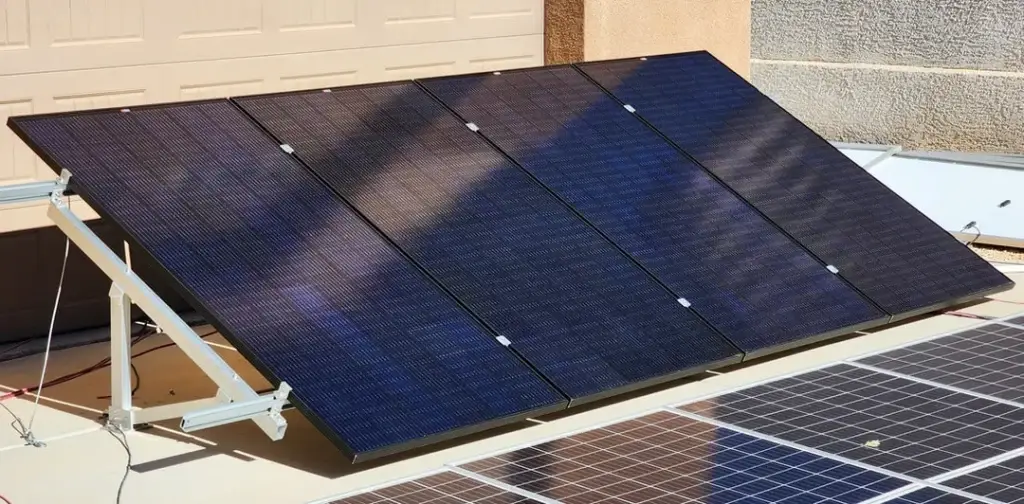
Put at least 5 panels in series. 5 to 8 is the range I recommend for 400W panels. With the SunGold 590W panels from my standard panels page, use 4 to 8:
| Panels | Array | Vmp | Voc at 77°F | Voc at −22°F |
|---|---|---|---|---|
| 4 | 2,360W | 178V | 209V | 242V |
| 5 | 2,950W | 222V | 262V | 302V |
| 6 | 3,540W | 266V | 314V | 362V |
| 7 | 4,130W | 311V | 366V | 423V |
| 8 | 4,720W | 355V | 419V | 483V |
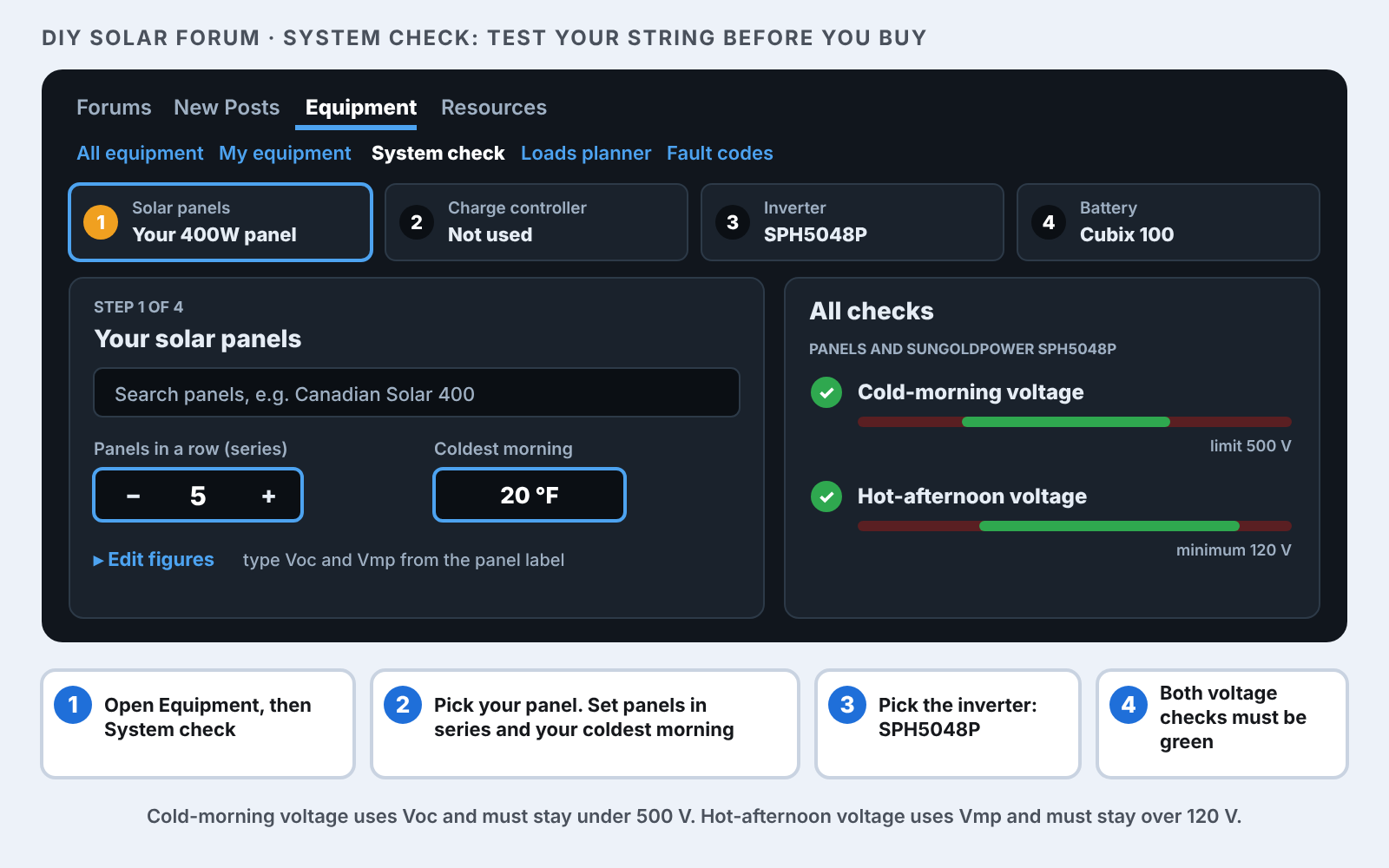
One string only: the inverter has one PV input rated 22A and takes up to 5,500W. Never exceed 500V at the PV input on the coldest morning. The planner at the top checks any panel.
The DIY Solar Forum has a free System check under the Equipment tab. It tells you if your exact panels work with this inverter.
This is the proper configuration for connection
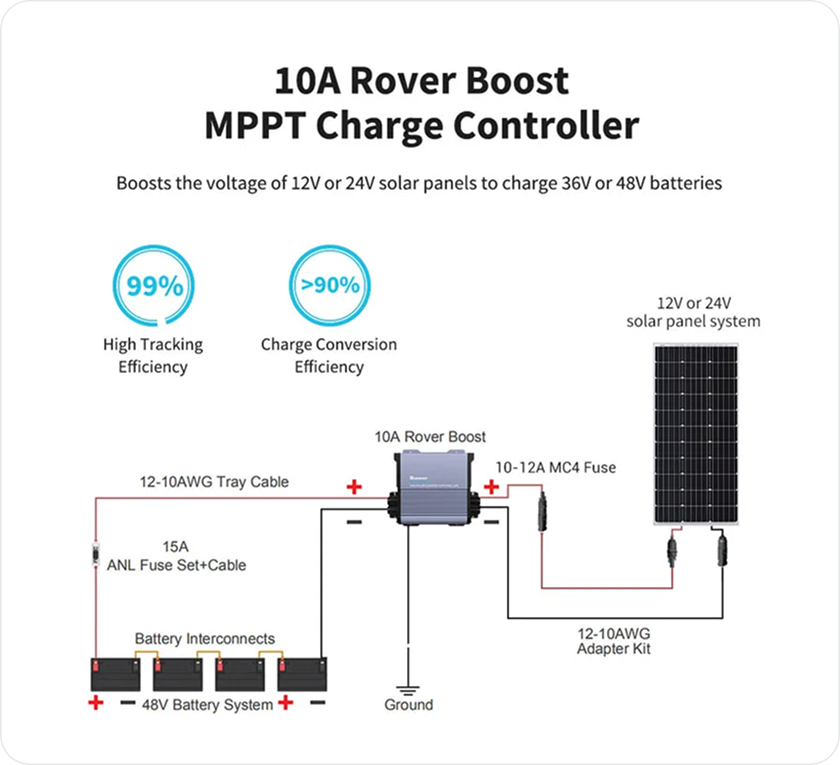
I charge my golf cart’s 48V battery from a 50W solar panel with a boost MPPT charge controller. It raises a low-voltage panel up to the battery voltage.
It fits RV and van roofs with room for only a panel or two. If you have space, higher-voltage panels in series are the cheaper route: get the string above 120V and the inverter charges from them directly.
You need a dedicated, externally regulated 48V alternator. A stock vehicle charging system is not built to charge a large, deeply discharged battery. Overland and van build shops install these. I do not have a specific model to recommend yet.
| What you see | What to do |
|---|---|
| Blank screen | Turn on the battery breaker and the inverter rocker switch, then press any button. |
| Fault 03, battery not connected | Check the battery cables and the battery breaker. |
| Fault 58, BMS communication | This only shows if you use the communication cable. Check the cable and menu items 32 and 33, or set item 08 to USER. |
| Fault 14, inverter overload | Turn off loads until you are under 5,000W, then restart. |
| Fault 17, inverter short circuit | Unplug the loads, find the shorted wire or appliance, then power up again. |
| Fault 09, PV over-voltage | Open the solar disconnect. The string is over 500V. Remove panels from it. |
| Fault 01 or 04, battery under-voltage | Charge the battery from solar or the AC input. |
| Fault 19 or 20, over-temperature | Let it cool. It restarts on its own. Give it more open space. |
The fault codes come from the inverter manual.
No. The SunGold 5000W puts out 120V only. A well pump, dryer or range that needs 240V needs a split-phase inverter, like the ones in my off-grid system builder.
5,000W continuous, the SunGold inverter's rating. For long battery life keep steady loads under about 2,200W, the battery's recommended 50A. The inverter surges to 10,000VA for motor starts.
Yes, through the AC input cord. On a household outlet set menu 28 to 20A, which charges at about 1,100W and pulls about 10A from the wall: empty to full in about 4.7 hours. On a generator, set 28 to 40A for about 2,200W, about 2.3 hours. Use a generator rated above that.
Yes. Strap the hand truck down so it cannot move. Plug the AC input cord into shore power to pass power through and charge the battery. With menu 63 set to ENA, the inverter switches the neutral-ground bond on its own when shore power comes and goes.
Any 51.2V, 16-cell server rack battery works with the voltage settings on this page. Check that its continuous current rating covers the loads you plan to run. Size the cables to it, and add a DC breaker if the battery does not have one built in.
Indoors or under cover, somewhere dry. The inverter runs from 14°F to 131°F and needs 8 in (200 mm) clear at its left and right vents. Keep it out of rain.
About 132 lb of gear (103 lb battery, 28.7 lb inverter) plus the hand truck. Tip it back and roll it.

Visit my Channel